Explore our network of country and industry based websites to access localized information, product offerings, and business services across our group.
Log in to start sending quotation requests for any product.
Don't have an account? Sign Up Here
Home Borax Anhydrous: Powering Asia's Electronics & Industrial Boom
Trade Insights | Applications and Buyers | 08 April 2026
Introduction
Understanding Borax Anhydrous: A Critical Industrial Material
The Engine of Growth: Asia's Electronics Manufacturing Sector
Beyond Electronics: Diverse Industrial Applications Fueling Demand
Sourcing High-Purity Borax Anhydrous in Asia: A B2B Guide
Conclusion
The Asian industrial landscape is undergoing a profound transformation, driven by technological advancement and manufacturing supremacy. At the heart of this evolution lies a suite of specialized materials, with Borax Anhydrous (anhydrous sodium tetraborate, Na2B4O7) emerging as a silent yet indispensable enabler. As we look towards 2026, a significant demand surge for this high-purity boron compound is forecasted across the continent, propelled primarily by the relentless growth of the electronics sector and its foundational role in traditional heavy industries. This article provides a comprehensive analysis of the market drivers, key applications, and the critical importance of reliable sourcing through established B2B chemical distribution networks like the Chemtradeasia and Borontradeasia platforms across Asia.
This anticipated growth is not incidental but a direct consequence of Asia's strategic positioning as the global factory for electronics, glass, ceramics, and metallurgy. Nations like China, Japan, South Korea, Taiwan, and increasingly Southeast Asian countries such as Vietnam, Malaysia, and Indonesia, are scaling production of high-tech components. Borax Anhydrous, with its unique properties as a flux, glass former, and source of boron, is integral to these processes. Understanding this dynamic is crucial for procurement specialists, product developers, and industry stakeholders aiming to secure their supply chains and capitalize on emerging opportunities in the boron chemicals market.
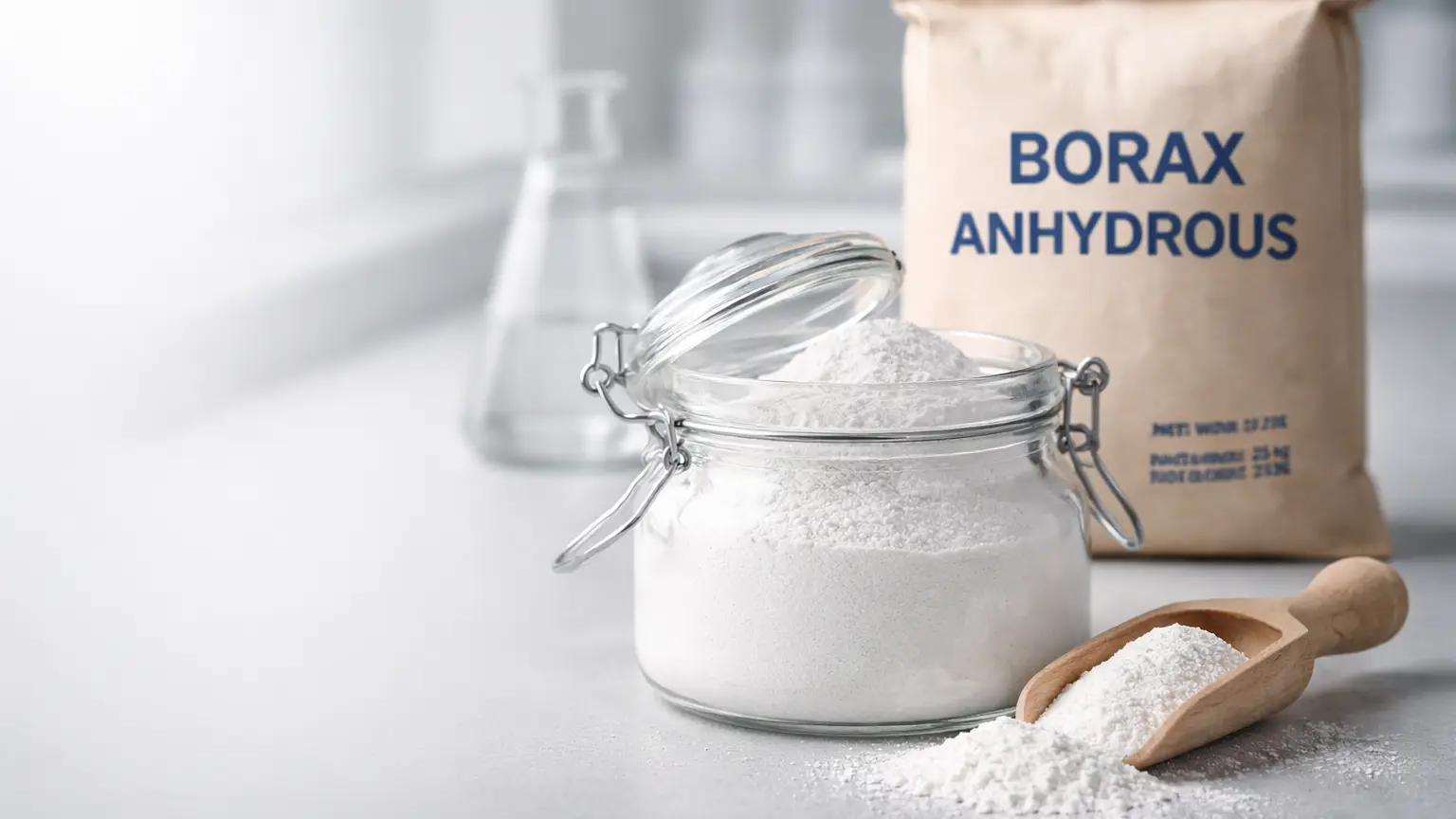
Borax Anhydrous is the dehydrated form of borax (sodium tetraborate decahydrate). The removal of water molecules results in a concentrated, high-purity source of boron oxide (B2O3), typically exceeding 68%. This anhydrous state is crucial for many industrial applications where the presence of water can cause defects, bubbling, or unwanted chemical reactions during high-temperature processes. Its key characteristics include a high melting point, excellent fluxing properties, and the ability to form stable borate glasses, making it a versatile compound far beyond its common household counterpart.
In specification terms, industrial-grade Borax Anhydrous is characterized by its high assay (often >99%), low heavy metal content, and consistent particle size distribution. These specifications are non-negotiable in electronics manufacturing, where impurity levels in parts per million (ppm) can determine the performance and yield of semiconductor devices. Compared to borax decahydrate, the anhydrous form offers significant logistical and economic advantages for bulk buyers: it is lighter (no water weight), has higher boron content per unit mass, and is more stable for storage and transport, reducing costs for Asia's extensive import-export chemical trade.
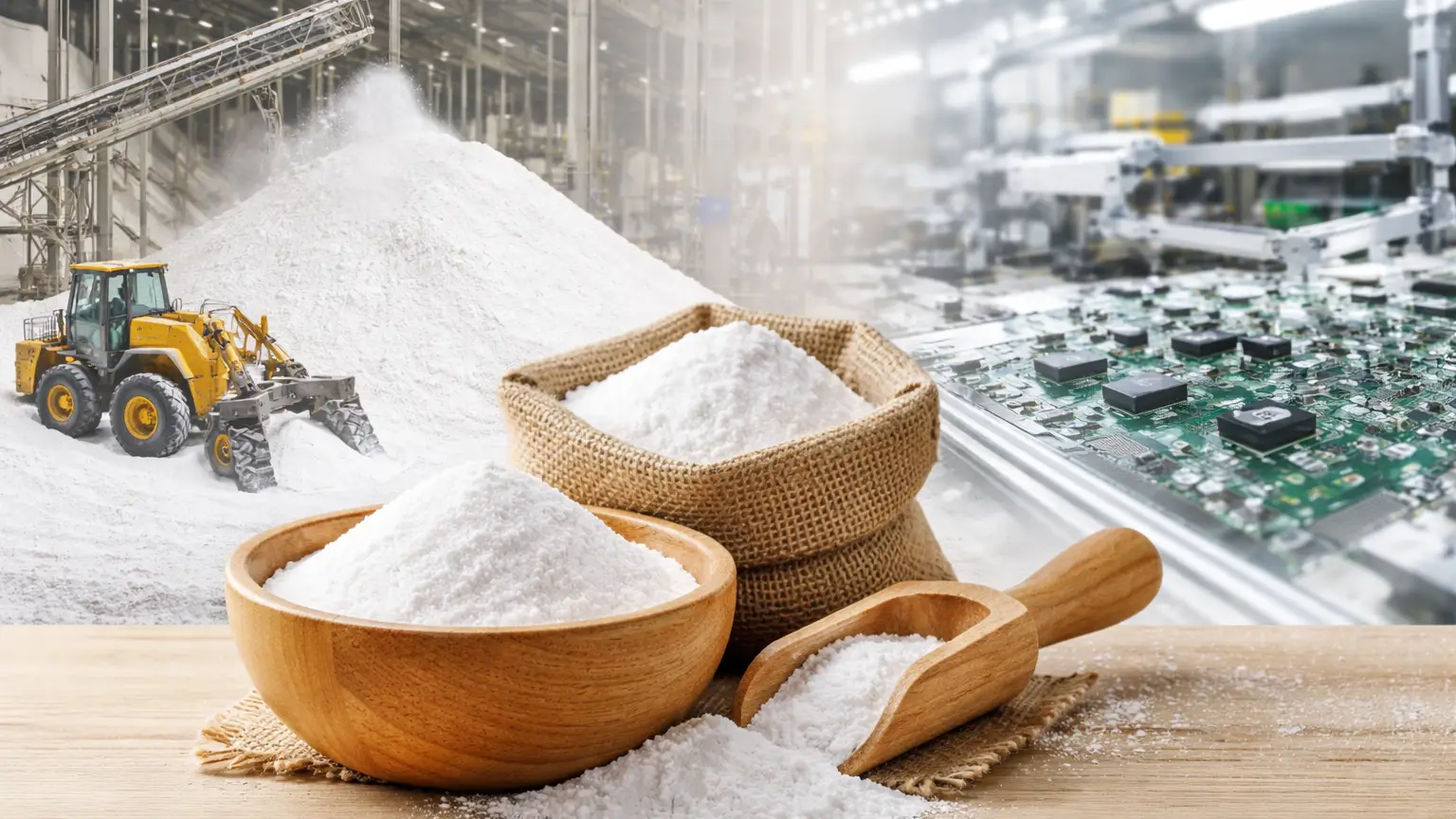
The most potent driver for Borax Anhydrous demand is Asia's dominance in electronics manufacturing. The compound plays several non-negotiable roles in this sector. Primarily, it is a fundamental component in the production of borosilicate glass, used for LCD screen substrates, optical fibers, and protective covers for devices due to its thermal shock resistance and chemical durability. As the demand for larger, thinner, and more durable displays grows, so does the consumption of high-purity boron sources like Anhydrous Borax in glass melting furnaces.
Beyond display glass, Borax Anhydrous is critical in the semiconductor fabrication process. It is used in chemical mechanical planarization (CMP) slurries as a pH buffer and corrosion inhibitor, ensuring flawless surface polishing on silicon wafers. Furthermore, in the production of permanent magnets—essential for hard disk drives, speakers, and electric vehicle motors—boron is a key alloying element with neodymium and iron. The shift towards 5G infrastructure, IoT devices, and electric mobility within Asia directly translates to increased consumption of boron for these neodymium-iron-boron (NdFeB) magnets. Market insights indicate that the Asian electronics chemicals market, of which boron is a key part, is projected to grow at a CAGR of over 6% leading into 2026, creating a substantial pull for refined boron products.
While electronics capture headlines, the demand base for Borax Anhydrous is broad and deeply entrenched in Asia's industrial core. The ceramics and enamel industries are major consumers, where boron acts as a powerful flux. It lowers the vitrification temperature of ceramic bodies and glazes, leading to energy savings during kiln firing and producing products with superior strength, gloss, and finish. This is vital for the region's massive production of tiles, sanitaryware, and technical ceramics.
In the metallurgy sector, Borax Anhydrous is used as a flux in welding and brazing rods and as a slag conditioner in steel production, helping to remove impurities. The compound also finds application in the manufacture of insulation-grade fiberglass, a material in high demand for construction and automotive applications across Asia's developing economies. Additionally, it serves as a precursor for the synthesis of other high-value boron derivatives, such as boric acid and advanced boron nitride, used in lubricants and heat-resistant materials. This diversification ensures a stable, multi-sector demand that underpins long-term market growth, insulating it from volatility in any single industry.
For industrial buyers across Asia, sourcing consistent, high-quality Borax Anhydrous is a strategic procurement activity. The complexity of regional logistics, varying national standards, and the need for technical support make partnering with a reputable B2B chemical distributor essential. Platforms like Chemtradeasia.com, Chemtradeasia.sg, and Borontradeasia.com specialize in bridging the gap between global producers and Asian manufacturers, offering a streamlined sourcing process for boron chemicals and other industrial raw materials.
These professional distributors provide more than just transactional services. They offer critical value-added services including reliable supply chain management, quality assurance with certificates of analysis (CoA), and regional expertise through localized portals like Chemtradeasia.co.id for Indonesia or Chemtradeasia.ae for the Middle East gateways. When procuring Borax Anhydrous, buyers should specify requirements such as B2O3 content, alkalinity, particle size (for uniform melting), and impurity limits tailored to their application—be it ultra-clear glass or electronic-grade ceramics. A trusted distributor can navigate these specifications, ensure regulatory compliance for cross-border trade, and provide the logistical support necessary for just-in-time delivery to manufacturing hubs from Shenzhen to Bangalore.
The trajectory for Borax Anhydrous demand in Asia points decisively upward towards 2026. This growth is structurally supported by the region's unwavering commitment to advancing its electronics manufacturing capabilities and strengthening its traditional industrial base. From the glass in smartphones and the magnets in EV motors to the tiles in modern infrastructure and the ceramics in advanced components, Borax Anhydrous is a foundational material enabling progress. For businesses operating in these sectors, proactive engagement with the supply chain is no longer optional but a competitive necessity.
Success will depend on securing partnerships with chemical suppliers who not only provide the material but also the regional market intelligence, quality guarantees, and logistical reliability required for seamless production. As the market expands, platforms dedicated to boron trade and chemical distribution will become increasingly vital hubs for facilitating this essential commerce, ensuring that Asia's industries have the raw material inputs needed to maintain their global leadership.
Disclaimer: This article is for informational and market insight purposes only. It is not intended as technical, safety, or professional advice. The applications and data mentioned are based on general industry trends and should not be relied upon for specific operational decisions. We strongly advise readers to independently verify all information with qualified experts, consult official technical documentation and safety data sheets (SDS/MSDS) for the products, and contact our technical team for guidance tailored to your specific requirements and applications.
We're committed to your privacy. Tradeasia uses the information you provide to us to contact you about our relevant content, products, and services. For more information, check out our privacy policy.


 English
 Indonesian
 简体字
简体字
 العربية
 Español
 Français
 Português
 日本語
日本語
 한국어
한국어
 Tiếng Việt