Explore our network of country and industry based websites to access localized information, product offerings, and business services across our group.
Log in to start sending quotation requests for any product.
Don't have an account? Sign Up Here
Home Borax Pentahydrate Drives Asia's Solar & Fiberglass Boom to 2026
Trade Insights | Applications and Buyers | 08 April 2026
Introduction
The Asian Market: Epicenter of Industrial Growth
Borax Pentahydrate: A Critical Industrial Workhorse
Solar Energy Expansion: Boron's Role in Glass Manufacturing
Fiberglass Reinforcement: Building a Stronger Future
Sourcing and Supply Chain Considerations in Asia
Conclusion
The global push towards sustainable energy and advanced materials is reshaping industrial supply chains, with Asia firmly positioned as the manufacturing powerhouse driving this transformation. At the intersection of these megatrends lies a humble yet indispensable chemical compound: Borax Pentahydrate (Na2B4O7·5H2O). As a primary source of boron oxide (B2O3), this versatile material is experiencing unprecedented demand, fueled by the explosive growth of the solar photovoltaic (PV) and fiberglass industries. Projections leading to 2026 indicate a sustained boom, particularly within Asia's dynamic economies, where government policies, manufacturing scale, and technological adoption converge.
This article provides a comprehensive analysis of the market forces propelling the demand for Borax Pentahydrate across Asia. We will delve into its specific applications in solar glass and fiberglass production, examine regional supply chain dynamics, and outline what manufacturers and procurers need to know to navigate this growing market. For businesses involved in construction, renewable energy, automotive, and electronics, understanding the role of this critical boron compound is no longer a niche concern but a strategic imperative for securing materials and maintaining competitive advantage in the coming years.
Asia's dominance in manufacturing is undergoing a qualitative shift from low-cost assembly to high-tech, capital-intensive production. Countries like China, India, Vietnam, Indonesia, and Malaysia are not only expanding their industrial bases but are also leading the world in adopting and manufacturing green technologies. The region accounts for over 60% of global solar panel production and a similarly commanding share of fiberglass output. National commitments under the Paris Agreement, coupled with ambitious domestic goals like India's 500 GW renewable target by 2030 and China's dual carbon goals, are creating a guaranteed, long-term pipeline for raw materials.
This industrial policy environment directly translates into surging demand for upstream chemical inputs. The market for boron chemicals in Asia is projected to grow at a CAGR of over 5.5% from 2023 to 2026, with Borax Pentahydrate being a significant volume driver due to its cost-effectiveness and suitability for large-scale industrial processes. Furthermore, the region's massive investments in infrastructure, electric vehicles, and wind energy—all heavy consumers of fiberglass composites—create a parallel demand stream, making Asia the undisputed epicenter for boron compound consumption.
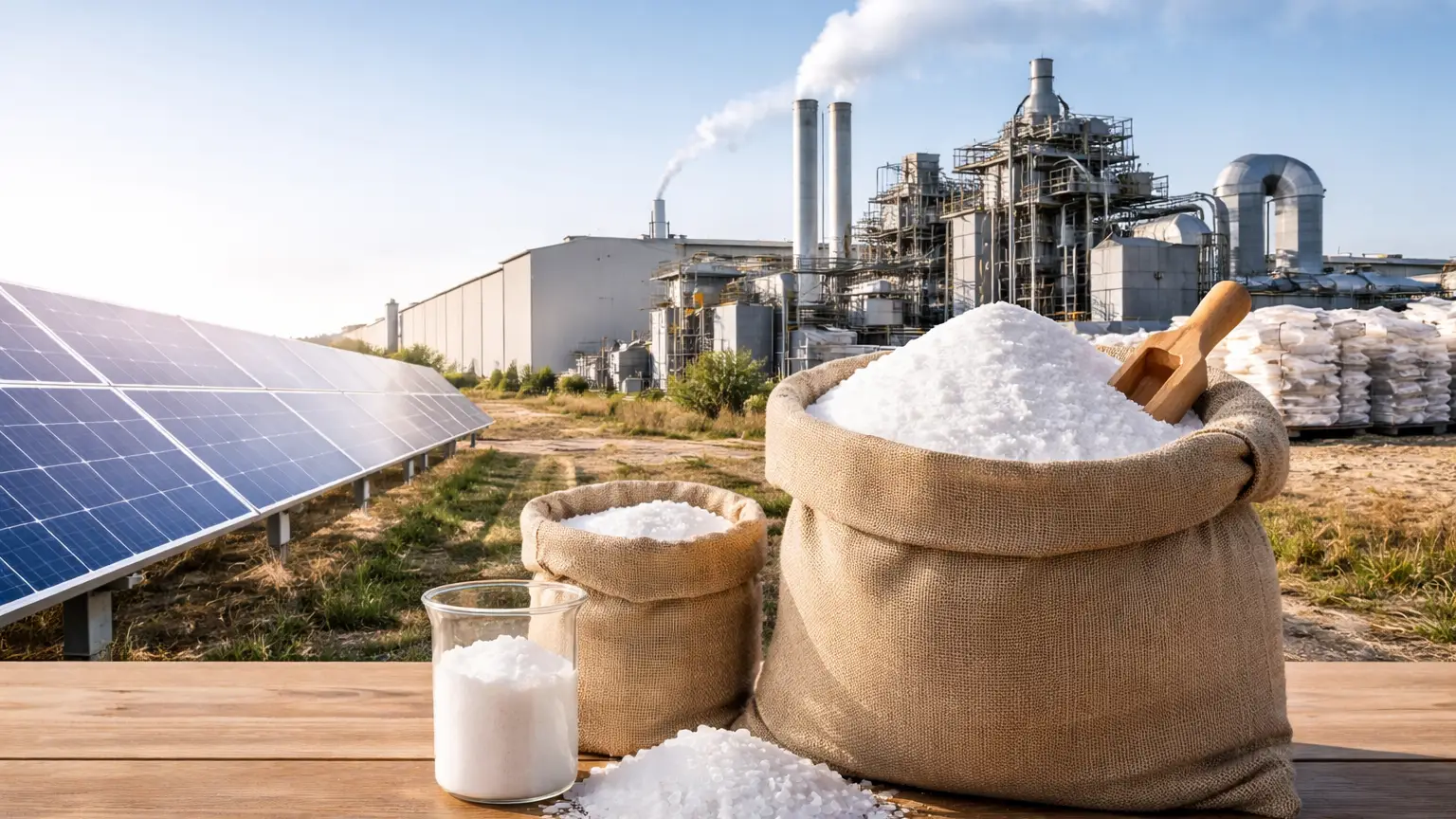
Borax Pentahydrate is a hydrated sodium borate, distinct from its more common decahydrate counterpart due to its higher boron content per unit weight (approximately 47-48% B2O3 equivalent) and greater thermal stability. This makes it particularly advantageous for energy-intensive processes like glass and fiberglass melting. Its primary function across applications is as a fluxing agent, lowering the melting temperature and viscosity of glass batches, which enhances homogeneity, reduces energy consumption, and improves the workability of the molten material.
In terms of specifications, industrial-grade Borax Pentahydrate typically appears as a white, free-flowing granular or powder material. Key quality parameters include B2O3 content, particle size distribution (critical for consistent melting), and low levels of impurities like iron oxide, which can cause discoloration in finished glass. Compared to anhydrous borax or boric acid, Borax Pentahydrate offers an optimal balance of handling safety (less dusty), solubility control, and cost-efficiency for bulk industrial use. Its consistent composition is vital for maintaining the precise chemical formulations required in modern glass and fiberglass furnaces.
The compound's benefits extend beyond mere fluxing. In glass matrices, boron enhances chemical durability, thermal shock resistance, and optical clarity. In fiberglass, it improves the strand integrity, mechanical strength, and resistance to environmental degradation. For procurement teams, understanding these technical benefits is crucial for evaluating suppliers and ensuring the material meets the stringent specifications required for end-use applications in solar panels or structural composites.
The solar industry's relentless drive for higher efficiency and lower Levelized Cost of Energy (LCOE) has made glass a critical component, not just a cover. Modern solar panels utilize low-iron, high-transmission tempered glass, often with anti-reflective coatings. The inclusion of Borax Pentahydrate in the glass batch is fundamental to achieving these properties. As a flux, it allows for the melting of high-purity silica sand at lower temperatures, reducing energy costs and furnace wear. More importantly, the boron integrated into the glass network significantly increases its resistance to thermal stress and environmental exposure, a non-negotiable requirement for panels with 25+ year warranties.
Trends toward bifacial panels, which capture light from both sides, and building-integrated photovoltaics (BIPV) are pushing glass specifications further. These applications demand even greater durability and optical performance, reinforcing the need for precise boron dosing. With Asia installing new solar capacity at a record pace—accounting for nearly three-quarters of global additions—the demand for solar glass and its raw materials is structurally secured. Major glass producers in China and Southeast Asia are scaling up capacity, directly correlating to increased offtake of Borax Pentahydrate from chemical distributors and producers.
Parallel to the solar boom, the fiberglass market is experiencing robust growth driven by lightweighting in automotive and transportation, wind energy expansion, and construction innovation. Fiberglass, or glass-reinforced plastic (GRP), relies on boron to tailor the properties of the glass fibers themselves. Borax Pentahydrate is a key ingredient in E-glass and Advantex®-type formulations, which constitute the vast majority of reinforcement fibers. Here, boron acts as a flux to facilitate fiber drawing and, crucially, imparts high electrical resistivity and resistance to acid corrosion in the final fiber.
The wind energy sector, in particular, is a massive consumer. A single modern wind turbine blade can contain tons of fiberglass. As Asian nations like Vietnam, the Philippines, and Japan expand their offshore and onshore wind farms, the regional demand for fiberglass composites skyrockets. Similarly, the automotive industry's shift towards electric vehicles (EVs) utilizes fiberglass for battery enclosures, body panels, and interior components to offset battery weight. This diversification of demand sources ensures that the market for Borax Pentahydrate remains resilient and growing, independent of cyclical swings in any single industry.
Navigating the Borax Pentahydrate supply chain in Asia requires strategic foresight. While major boron deposits are located in Turkey and the United States, a significant portion of refined boron chemicals, including Borax Pentahydrate, is processed and distributed within Asia to be closer to end-users. Reliable sourcing hinges on partnering with established B2B chemical distributors who have robust logistics networks, in-region warehousing, and deep technical knowledge. These distributors ensure just-in-time delivery, consistent quality from batch to batch, and provide crucial support documentation like Material Safety Data Sheets (MSDS/SDS).
For procurement professionals, key considerations include verifying the distributor's certifications, their relationships with primary producers, and their ability to handle bulk shipments—whether in bags, supersacks, or bulk containers. Given the commodity nature of the product, price volatility linked to energy costs and freight rates can be a factor. Establishing long-term supply agreements with trusted partners can mitigate this risk. Furthermore, a distributor with a pan-Asian presence, capable of serving markets from the Middle East to Southeast Asia through entities like chemtradeasia.ae or chemtradeasia.co.id, can offer significant advantages in supply chain flexibility and localized support.
The trajectory towards 2026 clearly indicates that Borax Pentahydrate will remain a cornerstone material for Asia's industrial and green revolution. Its dual role in enabling both solar energy capture and advanced composite materials places it at the heart of two of the most critical sectors for sustainable development. For manufacturers, securing a reliable, high-quality supply of this boron compound is not merely a procurement task but a strategic component of production planning and product quality assurance.
As market dynamics evolve, staying informed on technological shifts in glass and fiberglass formulations, as well as regional trade policies, will be essential. Building strong partnerships with knowledgeable chemical suppliers who understand the specific needs of the solar and composites industries will be a key differentiator for businesses aiming to capitalize on the opportunities this boom presents.
Disclaimer: This article is for informational and market insight purposes only. It is not intended as technical, safety, or professional advice. The information presented concerning applications, trends, and specifications should be verified independently. For specific applications, we strongly advise consulting with qualified experts, reviewing all official product documentation and safety data sheets (SDS/MSDS), and contacting our technical team for precise, application-specific guidance.
We're committed to your privacy. Tradeasia uses the information you provide to us to contact you about our relevant content, products, and services. For more information, check out our privacy policy.


 English
 Indonesian
 简体字
简体字
 العربية
 Español
 Français
 Português
 日本語
日本語
 한국어
한국어
 Tiếng Việt