Explore our network of country and industry based websites to access localized information, product offerings, and business services across our group.
To view and access the document, you are required to sign in to your account first.
Don't have an account? Sign Up Here
Home Boric Acid Price Index 2026: How Renewable Energy Expansion Is Reshaping Demand
Pricing Indices | 30 April 2026
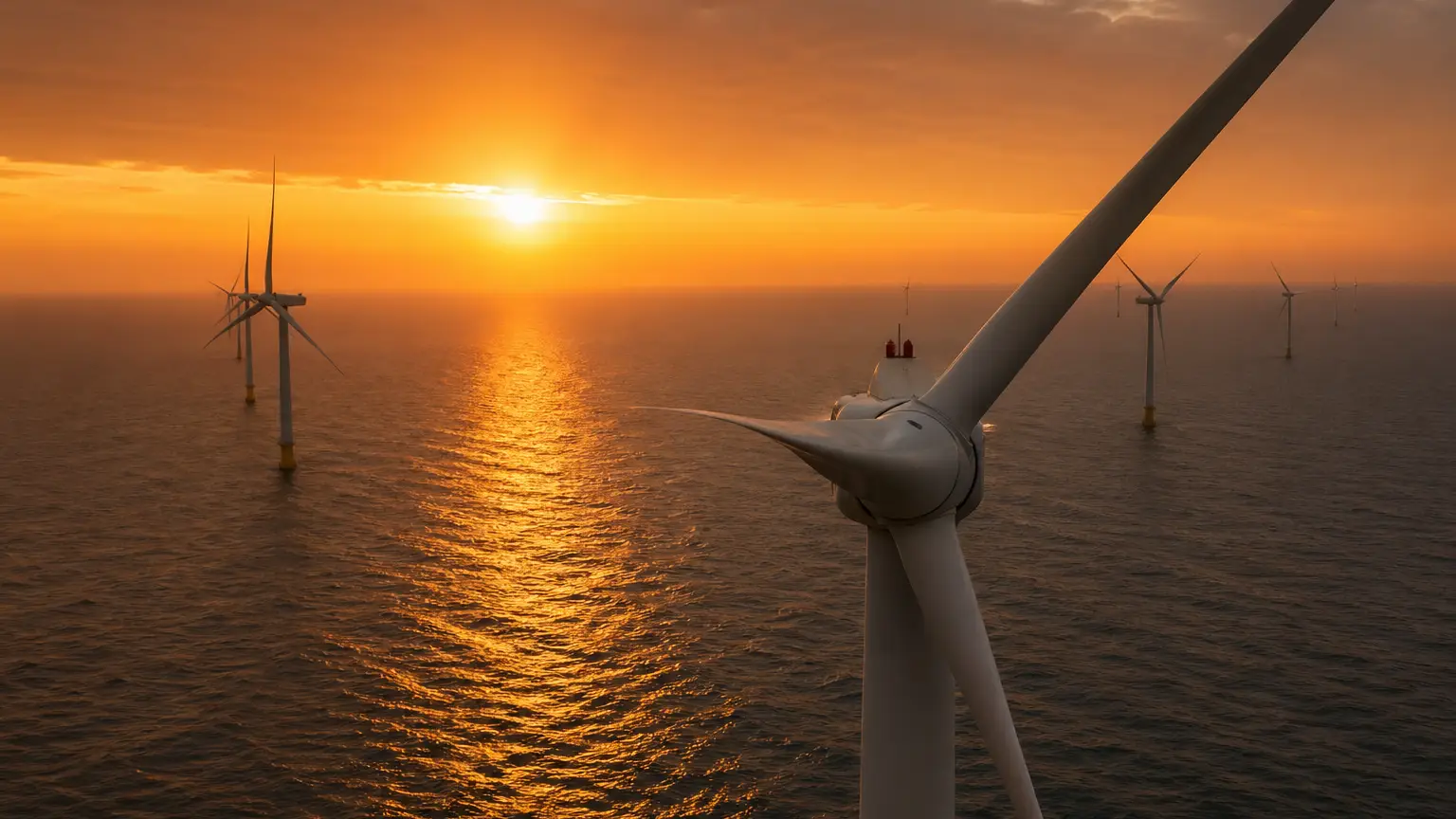
Boric acid prices reached $887/MT in the U.S. and $937/MT in China in December 2025, according to IMARC Group data. Japan traded at $1,032/MT in the same period — the highest among major importing economies — reflecting full import dependency and premium electronics-grade demand. The global average across all regions was approximately $1.29/KG ($1,290/MT) in Q4 2025, with Northeast Asia at roughly $2.46/KG — nearly double the global mean — per Expert Market Research benchmarks. Global prices in 2026 are forecast in the $1.25–$1.45/KG range, with regional divergence remaining a dominant feature of the market.
The renewable energy transition is emerging as a structural demand vector for boric acid that sits alongside — not instead of — the market's traditional anchors in glass, ceramics, and agriculture. The magnitude of this shift is building but not yet sufficient to break the prevailing price stability. What is sufficient to break price stability is any interruption to Eti Maden's Turkish supply dominance — the fundamental concentration risk that defines boric acid's pricing architecture in 2026 and will continue to do so through the decade.
| Region | Price (Q4 2025) | Direction vs. Q3 2025 | Source |
|---|---|---|---|
| USA | ~$887/MT | Stable-to-firm | IMARC Group |
| China | ~$937/MT | Stable | IMARC Group |
| Japan | ~$1,032/MT | Declining slightly | IMARC Group |
| Brazil | ~$922/MT | Edging higher | IMARC Group |
| South Africa | ~$959/MT | Advancing | IMARC Group |
| Northeast Asia (regional avg.) | ~$2,460/KG basis | Elevated vs. global | Expert Market Research |
| Global average | ~$1.29/KG | Broadly flat | Expert Market Research |
| 2026 forecast range | $1.25–$1.45/KG | Stable-to-modest upside | Expert Market Research |
Note: Boric acid prices vary significantly by grade (technical vs. pharmaceutical), origin (Turkish vs. U.S. vs. South American), and incoterm. The figures above reflect blended regional market assessments, not grade-specific spot quotes.
The standard mental model for boric acid procurement — price tracks Turkish mining costs, demand driven by borosilicate glass and ceramics, seasonal uptick in agricultural fertilizer season — was accurate for most of the past three decades. It is becoming progressively less accurate as the energy transition works its way through the industrial material stack.
Boric acid (H₃BO₃) is a weak inorganic acid derived from boron minerals, principally colemanite and tincal, and refined through a six-stage production sequence requiring calcination temperatures exceeding 900°C. Glass and ceramics absorb approximately 44–50% of global boric acid output — the glass segment alone is expected to hold 44.27% market share in 2026, according to Fortune Business Insights. Agriculture accounts for 15–20%, and the remainder is distributed across wood preservation, detergents, metallurgy, pharmaceuticals, and electronics.
But the growth vectors in 2026 are not in any of those legacy categories. They are in fiberglass for wind turbine blades, borosilicate glass for solar panel applications, boron in neodymium magnets for EV drivetrains and wind generators, and high-purity boric acid for semiconductor fabrication. Demand for boron is likely to grow between 1.5 and 2.5 times current levels between 2025 and 2030, with applications related to decarbonisation expected to rise from roughly 20–30% of current demand to around 65–75%. That is a demand composition shift of historic proportion if it materializes on that timeline — and even at a more moderate realization rate, the direction of travel is unambiguous.
The price question for 2026 is not whether renewable energy demand is growing. It is whether it is growing fast enough, and in grades aligned closely enough to the existing commodity boric acid supply base, to move the needle on the price index within the current year. The answer, for 2026 specifically, is: partially, and primarily through Northeast Asia.
Boric acid feeds into renewable energy infrastructure through four distinct technical pathways. Each operates on a different demand volume, growth rate, and grade specification. Buyers who conflate them risk misreading the price signals emerging from the renewable energy narrative.
Channel 1: Fiberglass for Wind Turbine Blades
Textile fiberglass made with borates is the structural material for wind turbine blades. Boron is integral to neodymium magnets in wind turbines and EVs, where 2–3% boron additives enhance magnetic coercivity. Beyond magnets, the fiberglass in the blades themselves — which can reach 80 meters in length for offshore installations — requires boron-containing glass compositions for the thermal and mechanical performance specifications demanded by wind OEMs. In 2022, fiberglass production consumed over 1.2 million metric tons of boron compounds annually. As global wind capacity additions accelerate under IEA net-zero scenarios, incremental fiberglass demand flows directly into boric acid consumption. This is the highest-volume renewable energy channel and the one most directly relevant to standard industrial-grade boric acid pricing in Europe and Northeast Asia.
Channel 2: Solar Glass and Borosilicate Applications
Solar panel covers require borosilicate or tempered glass with controlled UV transmission, thermal stability, and chemical durability. Specialty glass for solar modules, requiring precise boron ratios for UV resistance and thermal stability, is growing at 8% CAGR as photovoltaics expand. China's solar panel production dominance — the country accounts for approximately 80% of global solar module manufacturing — creates a concentrated demand point for solar-grade borosilicate glass and, by extension, boric acid imports from Turkey and the U.S. China's semiconductor industry, which recorded approximately 15% growth in 2024, requires high-purity grades that domestic Chinese boron deposits in Liaoning province cannot supply at sufficient purity, maintaining import dependency.
Channel 3: EV Permanent Magnets
Neodymium-iron-boron (NdFeB) permanent magnets are used in EV traction motors and wind turbine generators. Boron is a minority component by mass but is chemically essential for the crystalline structure that gives NdFeB magnets their high energy density. Annual boron demand from the EV sector is projected to nearly triple from the current 630 kilotonnes in coming years. This demand, however, does not flow through standard commodity boric acid grades — it requires high-purity boron intermediates and elemental boron, which sit higher on the processing chain. Commodity boric acid buyers are not directly exposed to this demand pathway. It is a demand category for specialized boron chemical producers, not fiberglass compounders or glass manufacturers.
Channel 4: Nuclear Applications and Energy Storage Research
Boron's neutron absorption properties make boric acid a critical material for nuclear reactor coolant systems and control rods. Rio Tinto's Optibor® boric acid formulation holds 45% market share in nuclear applications due to superior neutron absorption. Separately, research into boron-based hydrogen storage and boron-hydrogen fuel cycles for energy transport is active but remains pre-commercial. Neither application is a meaningful price driver for commodity boric acid in 2026. Nuclear demand is stable and contracted; hydrogen-boron energy applications are on a longer development timeline.
The practical pricing implication: Channels 1 and 2 — fiberglass and solar glass — are the renewable energy demand streams that translate into commodity boric acid price support in 2026. Channels 3 and 4 operate in different grade and value tiers and are not visible in standard industrial boric acid indices.
Understanding the boric acid price index in 2026 requires understanding that Eti Maden is not just the largest supplier — it is the structural determinant of global pricing. Turkey holds approximately 73% of the world's known boron mineral reserves. Eti Maden exports over 95% of its production to international markets, and Turkey and the United States together account for 75–80% of global refined boric acid supply. This is not a typical commodity market with many suppliers competing on margin. It is an oligopoly with a single dominant state-owned enterprise whose cost structure, production schedule, and export policy are embedded in the price signals received by buyers in Germany, Japan, India, and Brazil.
Eti Maden's structural cost advantage over all other producers is rooted in subsidized Turkish electricity rates. Because calcination in boric acid refining requires sustained temperatures above 900°C, electricity is a direct production cost — not a background overhead. Rio Tinto transitioned its California mobile equipment to renewable diesel in 2024, which reduced Scope 1 carbon emissions but simultaneously increased fuel costs, while Eti Maden capitalizes on subsidized electricity rates in Turkey, creating a pronounced cost disparity that ultimately influences transaction prices in the boron market. This is not a cyclical cost difference — it is a structural competitive position embedded in Turkish energy policy. For as long as Eti Maden's electricity subsidy persists, no non-Turkish producer can sustainably undercut Turkish boric acid on commodity grades.
The supply picture in 2026 has tightened beyond what the published global price indices fully reflect, for one recent and significant reason: on February 6, 2026, Searles Valley Minerals issued a WARN notice revealing permanent layoffs, underscoring the mounting pressure on unintegrated North American producers who find themselves at a disadvantage against Turkey's subsidized capacity. The closure of Searles Valley's California operations removes a meaningful non-Turkish supply source from the North American market, increasing U.S. buyer dependence on Turkish imports and narrowing origin diversification options for buyers who had balanced Turkey with a domestic U.S. source.
The next significant new supply is Ioneer's Rhyolite Ridge lithium-boron project in Nevada, which received regulatory clearance in October 2024. Production is not expected to begin before 2028 — meaning the North American supply gap created by the Searles Valley closure will persist for at least two full years. Chile's January 2026 critical minerals strategy placed stricter tailings standards on Salar de Surire and Salar de Atacama, where boric acid is a coproduct, adding compliance cost to South American supply at the same time North American capacity is contracting. The supply side of the 2026 market is tighter than the headline price stability suggests.
The defining characteristic of boric acid pricing in 2025 and into 2026 is sharp regional divergence. The Q4 2025 regional price hierarchy — with Northeast Asia at roughly $2.46/KG versus North America at approximately $0.81/KG — represents a spread of more than 3:1 across a single globally traded commodity. This is not a temporary freight anomaly. It reflects structural differences in import dependency, grade requirements, and end-use sector exposure across regions.
Northeast Asia trades at a persistent premium because the region holds no meaningful domestic borate reserves, its industrial buyers compete for limited Turkish and U.S. export volumes while absorbing full ocean freight, and the concentration of electronics, semiconductor, and solar manufacturing in China, Japan, and South Korea creates demand for high-purity grades that command additional premiums above commodity benchmarks. Japan's Q4 2025 price of $1,032/MT reflects both its complete import dependency and the purity specifications required by its glass and electronics sectors. China's price of $937/MT reflects a partially domestic supply base from Liaoning province boron deposits, which are lower-purity but reduce total import dependence for commodity applications.
North America recorded the sharpest Q3 2025 price decline of any major region — approximately 7.5% quarter-on-quarter — traced directly to softer fiberglass and construction demand. The U.S. housing sector's continued weakness suppressed fiberglass insulation and construction glass demand through the second half of 2025. With Searles Valley now closed, however, the North American market enters 2026 with a reduced domestic production base precisely when the renewable energy buildout — particularly wind power fiberglass — is expected to provide incremental demand support. The Q4 2025 U.S. price of $887/MT may represent a floor rather than a continued declining trajectory.
Europe has been caught between two opposing forces: weak construction sector demand (Germany posted a fifth consecutive year of negative construction growth in 2025 at approximately -0.5%) and emerging structural demand from the energy transition. Wind turbine blade fiberglass and the EU Renovation Wave Initiative — which prioritizes boron-containing mineral wool insulation for building energy retrofits — are the two renewable-linked demand drivers that will increasingly offset construction weakness. European buyers source primarily through Eti Maden's AB Etiproducts OY subsidiary or through regional distributors on term contracts.
South America posted the most consistent upward price trend through 2025 — four consecutive quarters of improvement — ending Q4 2025 at approximately $0.87/KG per Expert Market Research benchmarks. Regional fundamentals were stronger than the global headline: improving export demand and tightening local availability as Chilean compliance costs added pressure to the continent's co-production base.
In November 2025, the U.S. government formally designated boron as a federal critical mineral. This is not a price event in the immediate term, but it is a structural market signal with medium-term pricing implications. Critical mineral designation enables domestic producers to access federal tax incentives, accelerates permitting timelines for new extraction projects, and triggers supply chain security reviews by defense and technology procurement offices.
Rio Tinto is investing $500 million in California's Boron Operation from 2026 to 2030 to automate mining and reduce water usage by 40%. This investment, enabled in part by the regulatory clarity provided by critical mineral status, is the most significant non-Turkish capacity commitment visible in the market. It does not add boric acid production volumes immediately — the investment is primarily in automation and environmental compliance infrastructure — but it confirms Rio Tinto's long-term commitment to the California operation at a time when Searles Valley has exited. The critical mineral designation also intensifies strategic interest in Ioneer's Rhyolite Ridge project, which will co-produce lithium and boric acid from a single Nevada deposit when it enters production in 2028.
For European buyers, the parallel development is the European Commission's designation of borates among the 30 critical raw materials under the EU Critical Raw Materials Act. This designation is driving supply chain diversification mandates from European industrial buyers in defense, electronics, and renewable energy manufacturing — mandates that are beginning to influence procurement strategies but have not yet resulted in the dual-origin coverage that supply security plans require, given the absence of a large-scale non-Turkish European supply alternative.
Global boric acid prices hold in the $1.25–$1.45/KG range at global benchmark, as forecast by Expert Market Research. Energy costs in Turkey remain subsidized, Eti Maden maintains export volumes, and demand from glass, agriculture, and electronics provides steady volume absorption. The Searles Valley closure adds a modest structural upward pressure to North American prices relative to 2025 levels, but is partially offset by increased Turkish import flows. Renewable energy demand — wind turbine fiberglass and solar glass — provides incremental but not disruptive demand volume that gradually strengthens the baseline.
In this scenario, U.S. prices stabilize in the $900–$960/MT range through H1 2026, with modest firming in H2 as wind sector procurement picks up ahead of a seasonally strong installation period. European prices hold in the $1,000–$1,100/MT range, with construction weakness offset by energy transition demand. Northeast Asia remains at a structural premium of 1.8–2.0x the global average.
The most acute upside risk in boric acid is not a demand surge — it is a supply event at Eti Maden. Turkey sits in one of the world's most seismically active zones, and Eti Maden's primary production facilities at Kırka (Eskişehir) and Bigadiç (Balıkesir) have no functional equivalent outside Turkey that could absorb their volume. A production halt of even 4–6 weeks at Kırka — which processes over 2.4 million metric tons of ore annually — would trigger a global availability shock with no short-term remediation. Similarly, if the Turkish government were to impose export restrictions to prioritize domestic battery-grade borate production (a precedent was set briefly in 2022), prices across all importing regions would spike sharply. In an upside scenario of this type, global boric acid prices could approach $1.80–$2.20/KG at major import hubs, with Northeast Asia potentially exceeding $3.00/KG.
If European and North American construction activity deteriorates further — compressing fiberglass insulation and construction glass demand below 2025 levels — while China's solar manufacturing overcapacity drives a correction in solar glass procurement, boric acid could face a demand environment where the renewable energy channel's growth is offset by legacy sector weakness. In this scenario, global prices could ease toward $1.10–$1.20/KG, with North American prices potentially returning toward the $800/MT range seen in mid-2025. This downside is a meaningful risk if Chinese PV manufacturing capacity additions outpace installation growth and trigger a module price war that compresses upstream material procurement.
| Scenario | Price Range (Global Avg.) | Key Trigger | Probability | Timeframe |
|---|---|---|---|---|
| Base Case | $1.25–$1.45/KG | Eti Maden stable; renewable demand grows incrementally | Most likely | Full year 2026 |
| Upside | $1.80–$2.20/KG | Turkish supply disruption or export restriction | Real risk | Event-driven |
| Downside | $1.10–$1.20/KG | European construction collapse + China PV overcorrection | Tail risk | H2 2026 |
The asymmetry of risk is important: the upside scenario is sharper and faster-moving than the downside, because supply disruption at Eti Maden can manifest in days, while demand deterioration requires quarters to transmit into price indices. Buyers managing inventory on lean safety stock are disproportionately exposed to the upside risk relative to the downside opportunity.
The 2026 price index does not yet reflect the full renewable energy demand impact. But the structural trajectory is visible in the investment and capacity decisions being made now. Boron prices fluctuated between $800–$1,200/MT in 2025, with stabilization forecast at $1,300–$1,400/MT by 2030–2035 as recycling technologies and new mines alleviate shortages. That forecast range — already above the 2026 base case — reflects a market that progressively tightens as energy transition demand absorbs supply growth.
The boron market is expanding from an estimated 5.32 million tons in 2025 to a projected 5.54 million tons in 2026, with a 4.12% CAGR through 2031 per Mordor Intelligence. Within that growth, the fastest-expanding segment is energy-linked applications: boron in perovskite solar cells and EV battery anodes, boron nitride substrates for semiconductors, and wind turbine fiberglass. Asia-Pacific is expected to lead with 42% market share by 2030, fueled by China's solar panel production and India's accelerating electronics manufacturing. Eti Maden has already recognized this trajectory: it is expanding partnerships with EU battery manufacturers to secure boron supply for solid-state battery development, positioning itself in the highest-value tier of the market rather than remaining purely a commodity ore supplier.
For buyers in 2026, the long-term signal is clear: the renewable energy buildout is not a demand tailwind that can be dismissed as speculative. It is a structural shift in the demand composition that will progressively tighten specialty and semi-commodity boric acid supply through the decade. The procurement strategies appropriate for a stable commodity market — spot buying on short-term price dips, minimal safety stock, single-source dependency — are becoming progressively higher-risk strategies.
Boric acid prices in Q4 2025 ranged from approximately $887/MT in the U.S. to $1,032/MT in Japan, per IMARC Group data. The global average was approximately $1,290/MT ($1.29/KG) per Expert Market Research. For 2026, prices are forecast in the $1,250–$1,450/MT range at global benchmark. Northeast Asia remains the highest-priced region at roughly double the global average due to full import dependency and electronics-grade demand premiums.
Not yet at the level that breaks the 2026 price stability forecast, but it is clearly present in the demand data. Fiberglass for wind turbine blades and borosilicate glass for solar panels are contributing incremental demand in Europe and Northeast Asia that partially offsets the construction sector weakness that has suppressed prices since 2024. The larger renewable energy demand impact — driven by EV magnet and semiconductor applications — is building on a longer timeline toward 2028–2030, when it will become a dominant factor in the demand balance.
Three named drivers dominate: first, Eti Maden's Turkish supply concentration, which means Turkish energy costs, production schedules, and export policy are the most important single variable in global boric acid pricing. Second, the closure of Searles Valley Minerals in early 2026, which reduces North American non-Turkish supply and narrows origin diversification options. Third, regional demand divergence — with Northeast Asia's electronics and solar sector growth driving premium pricing while European construction weakness creates downward pressure in the continent's largest end-use market.
For buyers in agricultural applications, Q1–Q2 pre-Kharif procurement remains the historical optimal window, though competition from electronics sector buyers is compressing that advantage in South Asia. For industrial and glass buyers in North America and Europe, the Q2 2026 window may offer modestly better pricing before any potential Q3 supply-side events during the Northern Hemisphere summer maintenance season at Eti Maden. For all grades: do not defer to spot buying. The supply concentration risk in Turkey means price volatility from a disruption event can be swift and significant, with no spot market remedy available.
Term contracts covering at least 70–80% of annual volume are the appropriate structure for all grades in 2026. The supply concentration in Eti Maden creates an asymmetric risk — a disruption event spikes prices sharply with no alternative supply, while a benign supply year simply means term contract buyers paid approximately prevailing market rates. The cost of term contract insurance is modest relative to the exposure. Spot procurement should be limited to opportunistic volume above planned requirements, not used as the primary sourcing mechanism.
Turkey's Eti Maden controls approximately 73% of global known boron reserves and exports over 95% of its production. Any change in Eti Maden's production volume, maintenance schedule, export licensing, or pricing strategy transmits directly and rapidly into global boric acid index levels. The Turkish lira exchange rate, domestic Turkish energy costs, and Eti Maden's infrastructure investment decisions (including the new granular boric acid facility inaugurated in September 2024) are all embedded in the price that buyers in Germany, Japan, Brazil, and India pay. There is no global boric acid market independent of Eti Maden — it is the market.
The November 2025 critical mineral designation enables federal tax incentives for domestic U.S. boric acid production, accelerates permitting for projects like Ioneer's Rhyolite Ridge, and triggers supply chain security reviews for defense and technology applications. In the near term (2026–2027), it does not add meaningful new production volume — the designation is a regulatory catalyst, not an immediate supply response. By 2028, when Rhyolite Ridge is expected to enter production, the designation's impact on U.S. domestic supply will become tangible. Buyers in defense and semiconductor applications should engage with domestic U.S. producers now on offtake structures that align with 2028 production timelines.
Access the complete article and discover related coverage.
We're committed to your privacy. Tradeasia uses the information you provide to us to contact you about our relevant content, products, and services. For more information, check out our privacy policy.


 English
 Indonesian
 简体字
简体字
 العربية
 Español
 Français
 Português
 日本語
日本語
 한국어
한국어
 Tiếng Việt