Explore our network of country and industry based websites to access localized information, product offerings, and business services across our group.
Log in to start sending quotation requests for any product.
Don't have an account? Sign Up Here
Home Global Boric Acid Supply Chain 2026: Market Dynamics, Risks, and Opportunities
Trade Insights | Supply Chain | 30 March 2026
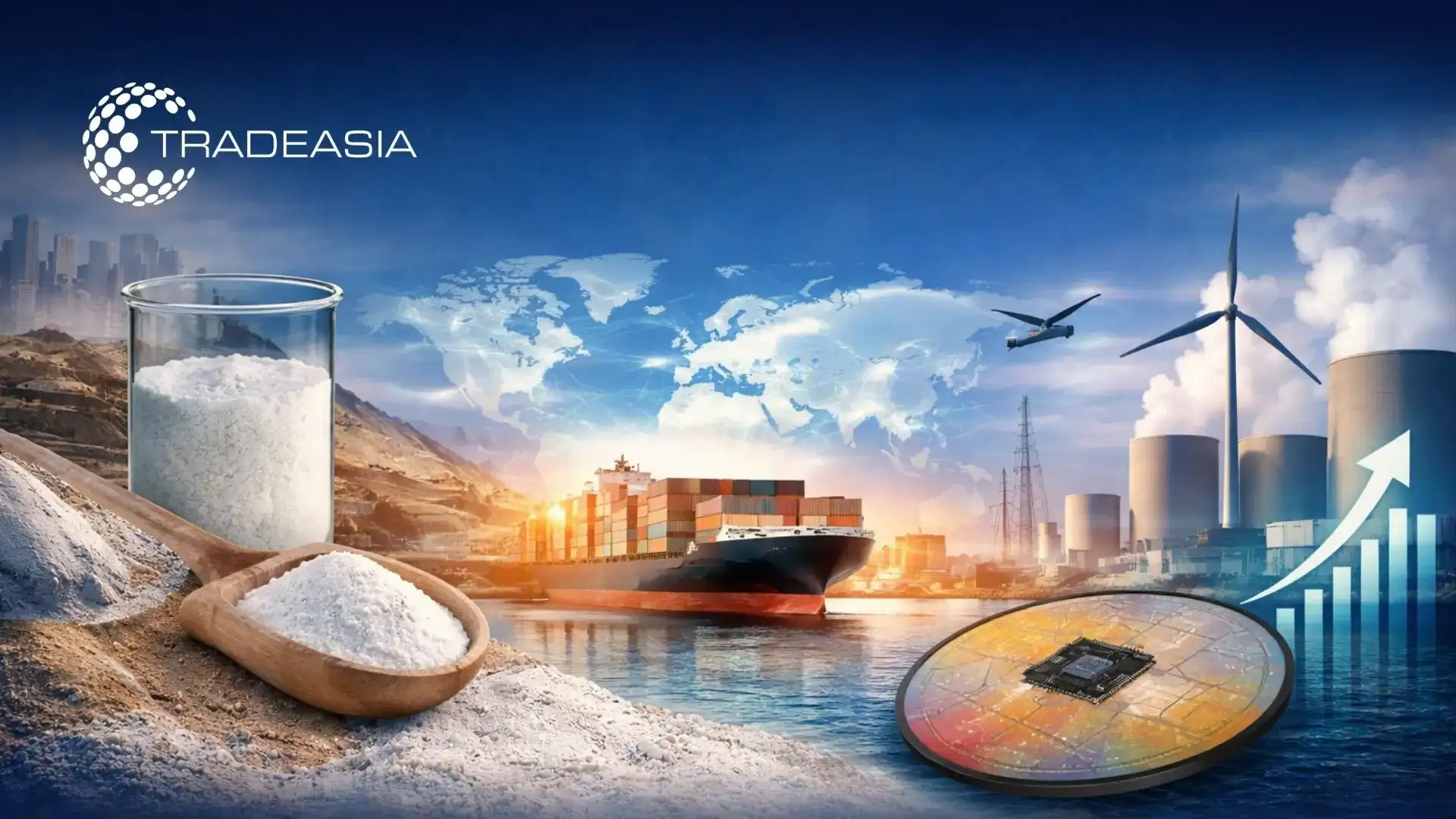
Introduction Boric Acid
The Evolving Global Market for Boric Acid
Key Applications Driving Demand
Spotlight on Boric Acid: Specifications and Sourcing Criteria
Major Supply Hubs and Logistics Considerations
Strategic Sourcing and the Role of Digital Platforms
Conclusion
The global chemical industry stands at a crossroads, shaped by geopolitical shifts, sustainability mandates, and technological advancements. Within this complex landscape, the supply chain for essential industrial chemicals like Boric Acid is undergoing a profound transformation. As we look towards 2026, stakeholders across manufacturing, agriculture, and energy sectors must navigate a web of new challenges and opportunities to secure this versatile compound. This article provides a comprehensive, forward-looking analysis of the global Boric Acid supply chain, examining market dynamics, key applications, logistical frameworks, and the evolving role of digital B2B platforms in facilitating efficient procurement.
Understanding the flow of Boric Acid from mine to end-user is no longer a mere operational concern but a strategic imperative. Price volatility, regulatory changes, and the push for supply chain resilience demand a proactive approach. For procurement managers and business leaders, insights into production hotspots, quality specifications, and reliable sourcing channels are invaluable. This deep dive aims to equip industry professionals with the knowledge needed to make informed decisions, mitigate risks, and capitalize on emerging trends in the Boric Acid market through the mid-decade.
The global Boric Acid market is projected to experience steady growth, with estimates suggesting a compound annual growth rate (CAGR) of 3-5% leading into 2026. This growth is underpinned by its irreplaceable role in traditional industries and its adoption in new, high-tech applications. However, the market structure is not uniform. Production remains heavily concentrated in regions with substantial borate mineral deposits, primarily Turkey and the United States (specifically California), which together dominate over 80% of the world's refined borate supply. South America, notably Chile and Argentina, also contributes significantly, creating a geographically tight supply network that influences global trade flows and pricing.
Several macro-trends are reshaping this market. Firstly, the global emphasis on food security is bolstering demand for Boric Acid in agricultural micronutrients and wood preservatives. Secondly, the energy transition is a double-edged sword; while it drives demand for Boric Acid in fiberglass insulation for wind turbines and as a neutron absorber in nuclear power, it also pressures mining operations with stricter environmental, social, and governance (ESG) standards. Furthermore, trade policies and regional tensions can quickly disrupt established routes, making supply chain diversification a top priority for buyers. The market price, therefore, is a function of raw material (colemanite, ulexite) availability, energy costs for processing, and geopolitical stability in key producing regions.
Boric Acid is a workhorse chemical with a surprisingly diverse portfolio of uses, each contributing to its stable demand profile. In the glass and ceramics industry, which consumes the largest volume, it is indispensable for manufacturing borosilicate glass. This glass, known for its thermal shock resistance and durability, is critical for laboratory ware, kitchenware, and high-performance lighting. The construction boom in emerging economies and the retrofitting of buildings in developed nations for energy efficiency continue to fuel demand for fiberglass insulation, another major borate-consuming sector where Boric Acid acts as a flux and flame retardant.
Beyond traditional sectors, innovative applications are emerging. In agriculture, it is a vital micronutrient for correcting boron deficiency in crops, directly impacting yield and quality. The electronics industry utilizes ultra-high-purity Boric Acid in the production of semiconductors and LCD screens. Furthermore, its properties as a mild antiseptic and flame retardant make it valuable in pharmaceuticals, personal care products, and treated textiles. This application diversity provides a buffer against downturns in any single industry, ensuring a robust baseline demand that suppliers and logistics providers can plan around through 2026 and beyond.
Not all Boric Acid is created equal. For procurement specialists, understanding technical specifications is paramount to ensuring product suitability and process integrity. Commercial Boric Acid (H3BO3) is typically available in two primary forms: technical grade and high-purity (USP/ACS) grade. Technical grade, often supplied as a fine powder or granular material, is suitable for industrial applications like glass manufacturing and wood treatment. Its purity usually ranges from 99.5% to 99.9%. High-purity grades, meeting USP (United States Pharmacopeia) or ACS (American Chemical Society) standards, are essential for pharmaceutical, food additive, and electronic applications, where impurity levels of heavy metals are strictly controlled.
When sourcing Boric Acid, buyers must evaluate suppliers against a rigorous checklist. Key criteria include consistent Boric Acid purity and particle size distribution, reliable certification of analysis (CoA) for each batch, and compliance with relevant international standards (REACH, FDA, etc.). Packaging is another critical factor; multi-wall paper bags with polyethylene liners are standard for powder, while bulk shipments in isotanks or supersacks require careful logistical planning to prevent moisture absorption and contamination. Establishing a relationship with a supplier who can provide consistent quality, transparent documentation, and technical support is more valuable than simply securing the lowest price, as it mitigates downstream production risks.
The geography of Boric Acid supply is intrinsically linked to borate mining. Turkey's Bandırma region and the U.S.'s Mojave Desert are the epicenters of production. From these hubs, Boric Acid is exported globally via major ports like Izmir and Los Angeles. South American production from the Andean regions feeds both local markets and exports through Pacific ports. This concentration means that maritime logistics form the backbone of the international Boric Acid supply chain. Buyers must account for freight rates, port congestion, and the availability of suitable containers or bulk vessels, which have been subject to significant volatility in recent years.
For just-in-time manufacturing, regional distribution centers and a robust in-country warehousing network are essential. Land transportation, whether by rail or truck, must adhere to chemical handling regulations, which vary by country. A significant trend heading into 2026 is the investment in "near-shoring" or regional stockpiling by large consumers to buffer against oceanic shipping delays. Furthermore, the handling of Boric Acid requires attention to its hygroscopic nature; storage facilities must be dry and well-ventilated. Partnering with logistics providers who have proven expertise in handling industrial chemicals and offer full visibility through track-and-trace technology is becoming a standard expectation for risk-averse procurement teams.
In today's interconnected market, strategic sourcing of chemicals like Boric Acid extends far beyond traditional RFQ processes. It involves dynamic risk assessment, supplier diversification, and leveraging data for predictive analytics. Companies are building more agile, transparent supply chains by qualifying multiple suppliers across different geographic regions to avoid single-point failures. This strategy requires extensive market intelligence and a network of vetted partners, which can be resource-intensive to develop independently.
This is where specialized digital B2B platforms are revolutionizing procurement. Platforms like Chemtradeasia serve as critical enablers, connecting global buyers with a curated network of pre-qualified Boric Acid suppliers. They provide a centralized marketplace for comparing real-time quotations, verifying supplier credentials, and accessing detailed product specifications and safety data sheets (SDS). For a buyer seeking Boric Acid, such a platform reduces the time and cost of supplier discovery, enhances transparency in pricing and availability, and facilitates smoother transactions. As we advance toward 2026, the integration of such digital tools will be a key differentiator for companies aiming to build resilient, efficient, and cost-effective chemical supply chains.
The journey of Boric Acid from mineral deposits to a vital component in countless industrial and consumer products illustrates the complexity and strategic importance of modern chemical supply chains. As demand grows and diversifies through 2026, success will depend on a deep understanding of market fundamentals, a meticulous approach to quality and specifications, and agile logistics planning. The ability to anticipate disruptions and leverage technology for smarter sourcing will separate industry leaders from the rest.
Building a resilient supply chain is an ongoing process of adaptation and partnership. By staying informed on global trends, rigorously vetting suppliers, and utilizing digital procurement platforms, businesses can secure a reliable flow of Boric Acid to support their operations and innovation goals in the years ahead. The future of chemical procurement is data-driven, transparent, and collaborative. Contact our team today to secure reliable Boric Acid supply and tailored sourcing solutions for your business needs.
We're committed to your privacy. Tradeasia uses the information you provide to us to contact you about our relevant content, products, and services. For more information, check out our privacy policy.


 English
 Indonesian
 简体字
简体字
 العربية
 Español
 Français
 Português
 日本語
日本語
 한국어
한국어
 Tiếng Việt




















