Introduction
The boron industry is entering a decisive phase by 2026, driven by the rapid expansion of clean energy technologies, advanced glass and ceramics, agrochemicals, and specialty materials. As manufacturers tighten specifications and governments push for higher energy efficiency and sustainability, demand for high-purity boron compounds is rising. Among these compounds, borax anhydrous stands out as a core material for glass, detergents, metallurgy, flame retardants, and numerous industrial formulations.
Singapore, though not a producer of boron ores, has become a strategic gateway for boron-based materials in Asia-Pacific. Its advanced port infrastructure, robust chemical logistics ecosystem, and pro-trade regulatory framework make it an ideal base for a borax anhydrous supplier targeting regional markets such as Indonesia, Malaysia, Vietnam, Thailand, India, and China. As a result, companies seeking stable access to boron chemicals increasingly turn to Singapore-based distributors and digital trading platforms.
In this context, platforms like borontradeasia.com are positioning themselves as key connectors between global producers and end-users. By 2026, buyers will not only evaluate price and purity, but also supply reliability, documentation quality, sustainability credentials, and digital integration. This article examines the boron industry outlook for 2026 with a focus on Singapore and provides a detailed view of borax anhydrous specifications, applications, and sourcing strategies through reliable supplier, distributor, and bulk order channels.
Global and Regional Outlook for the Boron Industry in 2026
Global boron demand has been on a steady upward trajectory. Industry analyses over the past few years have estimated the boron market size in the low tens of billions of US dollars, with compound annual growth rates in the mid-single digits. By 2026, this growth is expected to be underpinned by four pillars: energy-efficient glass and insulation, electric vehicles and permanent magnets, advanced agriculture, and specialty chemicals. Each of these pillars relies on boron compounds—particularly borates—for thermal stability, chemical resistance, and nutrient delivery.
Asia-Pacific is projected to remain the fastest-growing region for boron consumption. Rapid urbanization in Southeast Asia, large-scale infrastructure projects, and the expansion of local manufacturing bases for glass, ceramics, detergents, and electronics are key drivers. Countries like Indonesia and Vietnam are increasing their share of global glass and tile production, and these industries are heavy users of borax anhydrous and related borates. As production shifts to Asia, the need for regionally accessible, well-managed boron supply chains becomes critical.
Within this regional dynamic, Singapore acts as a trade and distribution nerve center. Multinational chemical producers frequently use Singapore as their Asia-Pacific headquarters, coordinating shipments from mining regions such as Turkey, the United States, and South America to customers across the region. A borax anhydrous distributor based in Singapore can leverage world-class port facilities, efficient customs procedures, and sophisticated warehousing to provide just-in-time deliveries, smaller lot sizes, and customized packaging. By 2026, such capabilities will be even more important as customers demand flexibility and resilience against geopolitical and logistics disruptions.
Borax Anhydrous: Properties, Grades, and Industrial Applications
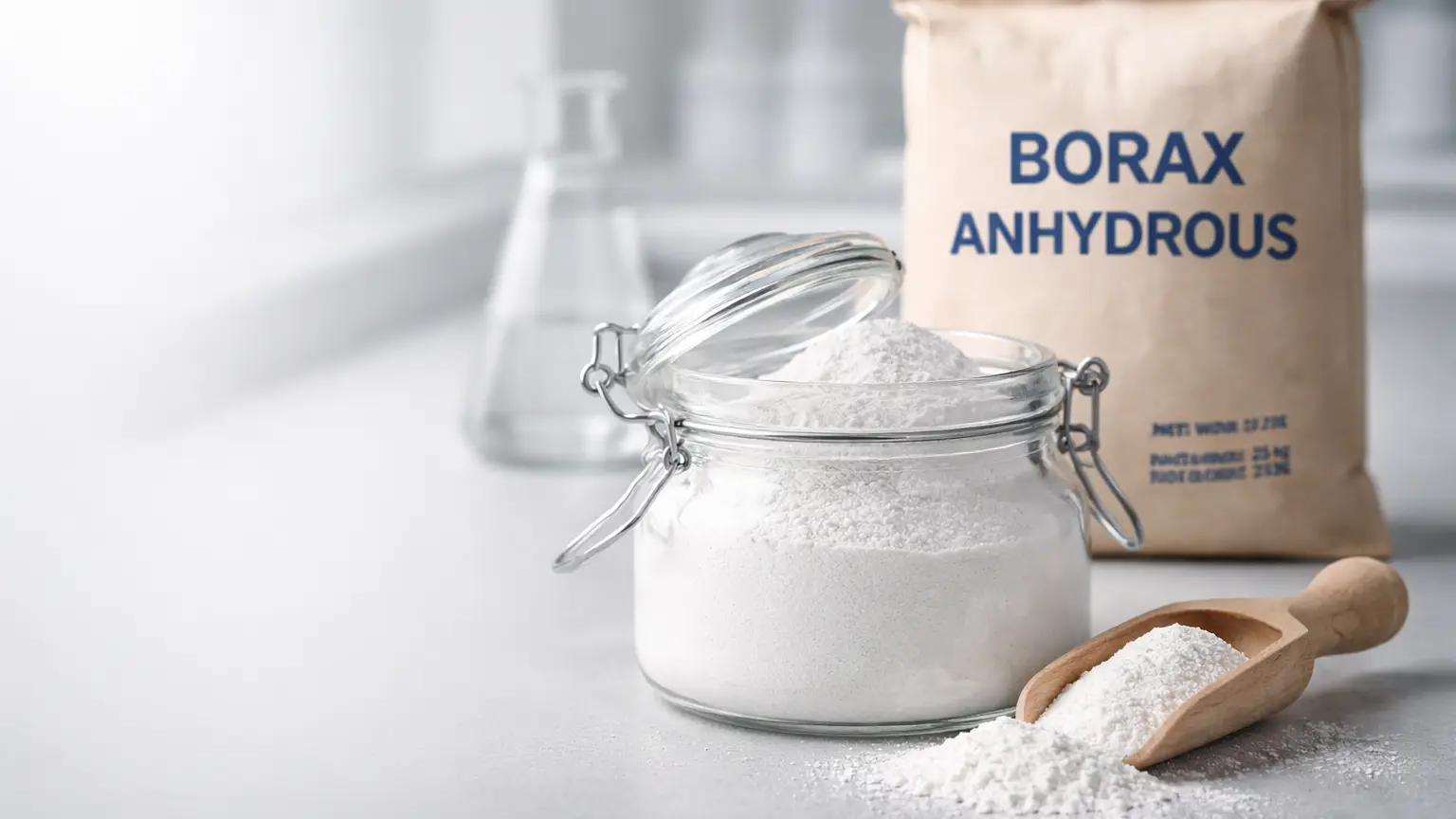
Borax anhydrous, chemically known as sodium tetraborate (Na2B4O7), is a dehydrated form of borax that contains no water of crystallization. Compared with decahydrate and pentahydrate forms, borax anhydrous offers higher boron content per unit weight and distinct melting and solubility characteristics. These properties make it especially attractive for high-temperature processes, glass formulations, and applications where controlled water content is critical. For industrial buyers, understanding these differences is essential when specifying material from a borax anhydrous supplier.
Typical industrial grades of borax anhydrous come in powder or granular form, with boron trioxide (B2O3) content often in the 68–70% range, and low levels of impurities such as chlorides, sulfates, and heavy metals. Particle size distribution is another key specification: fine powders enhance reactivity and uniform mixing in glass or glaze batches, while coarser granules may be preferred for easier handling, reduced dusting, and controlled dissolution. Suppliers listing on borontradeasia.com commonly provide technical data sheets detailing chemical composition, pH, bulk density, and recommended storage conditions.
The applications of borax anhydrous are diverse. In the glass and fiberglass industry, it acts as a flux, lowering the melting temperature and improving the chemical durability and thermal shock resistance of the final product. In ceramic glazes and frits, it helps control viscosity, gloss, and color development. Detergent manufacturers use borax anhydrous as a builder and buffering agent, enhancing cleaning efficiency and stabilizing formulations. It also finds use in non-ferrous metallurgy as a flux for refining metals, in welding and soldering fluxes, and in certain flame-retardant systems. As demand for these downstream products grows into 2026, reliable access to consistent-quality borax anhydrous through a trusted borax anhydrous distributor becomes a strategic requirement for many producers.
Singapore as a Strategic Hub for Borax Anhydrous Suppliers
Singapore’s position as a global trading hub is especially valuable for bulk and specialty chemicals. The country offers deep-water ports, integrated logistics clusters, and strong connectivity to major shipping routes that link producers in the Americas and Europe to end-users across Asia and the Middle East. For a borax anhydrous supplier, basing distribution operations in Singapore means shorter lead times to regional customers, better inventory management, and access to a sophisticated ecosystem of freight forwarders, tank and dry bulk storage providers, and chemical logistics specialists.
Regulatory clarity and safety standards are also critical in the boron trade. Singapore’s regulatory framework for hazardous and industrial chemicals is aligned with international norms such as the Globally Harmonized System (GHS). This environment encourages best practices in packaging, labeling, and documentation. Buyers using platforms like borontradeasia.com benefit from suppliers that comply with these standards, providing Safety Data Sheets (SDS), Certificates of Analysis (COA), and transport documentation that meet the expectations of multinational manufacturers and auditors.
Moreover, Singapore’s emphasis on digitalization and trade facilitation supports more transparent and efficient boron supply chains. Electronic documentation, digital customs clearance, and integrated port community systems reduce administrative friction and help manage complex multi-country deliveries. By 2026, as supply chain visibility and traceability become standard expectations, working with a borax anhydrous distributor that operates from Singapore and leverages digital platforms will offer a competitive edge in responsiveness, risk management, and cost control.
Choosing a Borax Anhydrous Supplier, Distributor, and Bulk Partner
For manufacturers and formulators planning their procurement strategy through 2026, selecting the right borax anhydrous supplier or distributor involves more than comparing price lists. Quality consistency is paramount: variations in purity, moisture content, or particle size can affect batch performance, production efficiency, and end-product quality. Buyers should look for suppliers that provide detailed technical specifications, batch-level COAs, and a track record of meeting tight tolerance levels. Platforms such as borontradeasia.com enable buyers to compare multiple offers and technical profiles, which is especially useful when qualifying alternative sources or backup suppliers.
When considering a borax anhydrous bulk order, logistics capabilities become a central factor. Bulk shipments require optimized packaging (e.g., big bags, lined bulk containers), appropriate storage conditions to prevent caking and contamination, and well-planned transport routes. A Singapore-based borax anhydrous distributor can consolidate shipments from different origins, manage safety stock, and tailor delivery schedules to align with production cycles. This reduces the risk of stockouts or overstocking, both of which can have significant cost implications in high-volume industries like glass, ceramics, or detergents.
Another key consideration is the supplier’s approach to sustainability and regulatory compliance. Many downstream customers—particularly in electronics, building materials, and consumer products—are tightening their environmental and social governance (ESG) requirements. Working with a borax anhydrous supplier that can document responsible sourcing, proper waste handling, and reduced environmental footprint can strengthen a buyer’s own ESG profile. In addition, by 2026, digital procurement tools and online platforms like borontradeasia.com are expected to play a larger role in supplier assessment, enabling faster RFQ cycles, transparent communication, and better integration with enterprise resource planning (ERP) systems.
Conclusion
By 2026, the boron industry will be shaped by growing demand from energy-efficient glass, construction materials, electric vehicles, and advanced agriculture, with Asia-Pacific at the center of consumption growth. Within this landscape, borax anhydrous remains a foundational boron compound, valued for its high boron content, fluxing capability, and versatility across glass, ceramics, detergents, metallurgy, and flame-retardant applications. Ensuring stable and high-quality supply of borax anhydrous will be essential for manufacturers seeking to capture opportunities in these expanding sectors.
Singapore’s role as a strategic logistics and trading hub positions it as an ideal base for a borax anhydrous supplier or distributor serving the wider region. Its advanced infrastructure, strong regulatory environment, and digital trade systems support efficient, compliant, and resilient boron supply chains. Buyers who leverage Singapore-based distributors and online trade platforms gain advantages in lead time, documentation quality, and supply chain visibility, all of which will be increasingly important in a more demanding and competitive market.
For procurement teams, engineers, and business planners, the path forward involves carefully selecting partners capable of handling borax anhydrous bulk order requirements while meeting technical, logistical, and sustainability expectations. Digital platforms such as borontradeasia.com can help connect with vetted suppliers, compare specifications, and manage sourcing more transparently. As the boron industry evolves through 2026, those who secure reliable borax anhydrous supply, anchored in strategic hubs like Singapore, will be better positioned to support innovation, maintain production continuity, and meet the rising performance standards of their own customers.
Leave a Comment