Explore our network of country and industry based websites to access localized information, product offerings, and business services across our group.
Log in to start sending quotation requests for any product.
Don't have an account? Sign Up Here
Log in now to access technical product documents from our product range.
Don't have an account? Sign Up Here
Home All Products Borax Anhydrous (Technical Grade) - Turkey
|
Origin |
: Turkey |
|
IUPAC Name |
: Sodium Tetraborate |
|
Cas Number |
: 1330-43-4 |
|
HS Code |
: 28401100 |
|
Formula |
: Na2B4O7 |
|
Appearance Name |
: White Crystalline Powder |
|
Common Names |
: Borax Anhydrous, Borax Glass, Borax |
|
Packaging |
: 25 kg PP Bag |
For more detailed information including pricing, customization, and shipping:
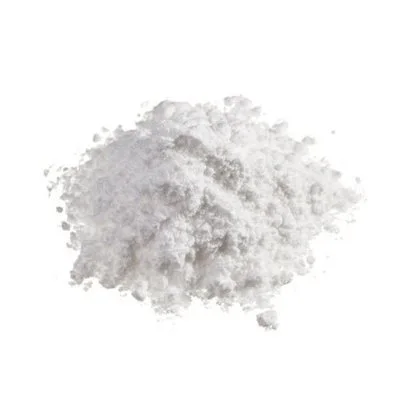
Borax anhydrous is an inorganic compound that appears as a white, fine crystalline powder. Borax hydrates are naturally found in evaporite deposits formed through the repeated evaporation of seasonal lakes. While naturally occurring borax is typically purified through recrystallization, it can also be synthetically produced from other boron-based compounds. The term “borax” is commonly used to refer to several closely related minerals or chemical compounds that differ in their water of crystallization, such as borax decahydrate, borax octahydrate, and borax pentahydrate.
Anhydrous borax is produced by heating hydrated borax until it melts into a glassy form, which is then ground into a fine powder. This process removes nearly all water content, and the resulting material remains stable under dry storage conditions. Although slightly soluble in water, anhydrous borax is much less soluble than raw borax. It does not puff or expand when melted, minimizing powder loss in kilns with strong airflow, and it melts more easily. In contrast, other hydrated forms tend to swell during melting, creating a porous structure that slows the melting process.
Borax anhydrous serves as a key source of boron trioxide (B₂O₃) in the production of various types of borosilicate glass, including heat- and chemical-resistant glass, illumination glass, and optical lenses. In ceramics, it is used as an additive in ceramic slips and glazes to enhance fit and performance.
In small-scale gold mining, borax anhydrous is utilized as a safer alternative to mercury for gold extraction, as it is significantly less toxic and more environmentally friendly.
Borax anhydrous functions as a water softening agent, effectively removing both temporary and permanent hardness caused by calcium (Ca²⁺) and magnesium (Mg²⁺) ions in water.
Borax anhydrous is commonly used as an ingredient in rubber polymers, including products like slime and Silly Putty. It also finds application in the production of medical and cosmetic containers, glass beads, and hollow microspheres. Additionally, it is employed in biochemistry for preparing buffer solutions, as a fire retardant, antifungal agent, in fiberglass manufacturing, as a flux in metallurgy, in neutron-capture shielding for radioactive materials, and even as a texturing agent in certain food preparations.


 English
 Indonesian
 简体字
简体字
 العربية
 Español
 Français
 Português
 日本語
日本語
 한국어
한국어
 Tiếng Việt



















---chile.webp)

---turkey.webp)